Lovely Daughter gave us a lovely plaque to hang on our front door that reads, “Velkommen,” a nice Norwegian “Welcome.”
I want to hang this below it:

My Wonder Woman says, “No.”
*sigh*

"In a democracy (‘rule by mob’), those who refuse to learn from history will be the majority and will dictate that everyone else suffer for their ignorance."
Lovely Daughter gave us a lovely plaque to hang on our front door that reads, “Velkommen,” a nice Norwegian “Welcome.”
I want to hang this below it:
My Wonder Woman says, “No.”
*sigh*
Just look for “gimmes” from wannabe writers on Amazon.1
Yeh, I’m just a wee tad irked with the “self-pub” wannabe writers who
a. Don’t bother to learn English (though it’s their native tongue)
b. Think characterization is accomplished by listing all the name-brand products a character uses, and describing the character by just saying what dim-witted celebrity the character resembles
c. Doesn’t bother to read their own text, and so commits multiple errors of continuity at the speed of light
d. And then packs all this wonderfulness into 100 pages (or, sometimes even worse, 200) of a “novelette lite” and calls it a “novel.” *sigh* “Novelette Lite” even with padding the word count with useless crap like, “. . .in which case he would probably be stuck out here for the rest of his life, however brief a period that turned out to be.” No. DELE “a period.” Wasted electrons. (*sigh* Rather like this whole post, eh? *heh*)
Fortunately, I only actually read through about one of these a week, because I reject the absolute worst of them within the first page of text. The “survivors” often get eviscerated in reviews, though I only note ten or so (and when I’m feeling generous, sometimes fewer) of the worst examples of text that would gag a maggot.
Yes, it got worse in the book I picked to pick on here. Because of certain external factors (namely a recommendation from someone whose recommendations are often on target), I stuck it out with the book the above example came from–through even more garbage–until,
“. . .the slug had been fired from a large-caliber handgun, probably a .45. . . He knew that such projectiles traveled at a high velocity, faster than the speed of sound. . . ”
Urm, no. A good rule of thumb for speed of sound, at sea level, under ideal conditions, is ~1,125fps. Not even a .45ACP+P with a light bullet weight of only 185gr travels that fast (max out at ~1,000fps muzzle velocity), and given the circumstances in the scene, I _seriously_ doubt the writer was referring to (or is even aware of) the .45 Colt (often called “Long Colt”) cartridge or the firearms it is used in, and even then, if he were, he’d have to have been talking about a +P load.
Sorry. When a writer just keeps spreading The Stupid, the book should be relegated to the scrub pile.
1Do note that I keep on “buying” freebie Indie pub books because I have thereby found a few really excellent writers whose other work I end up buying and reading, and not just writers of fiction. I’ve not yet found any good poets that way, but hope springs eternal.
To anyone I may have offended: if “Love means you never have to say you’re sorry,” then, sorry.
(I hope someone explains this to “slow readers.” *heh*)
Asking me what I’m thinking about runs the risk of me actually answering with. . . what I am thinking about.
“Zombie elves from the North Pole” was one recent answer.
Just a passing shot. . .
Reading a bio of Lance Armstrong and ran across:
“. . .diagnosis of his symptoms, including coughing up blood and a swollen testicle.”
Coughing up a swollen testicle?!? THAT’S SERIOUS!
*heh*
OK, so Armstrong’s cancer was serious, but that lack of a comma was amusing.
. . .or not.
I see articles occasionally about the death of passwords, creating effective passwords, blah-blah. Well, passwords and the insecurities created by stupid (or lazy. . . or more like both) people and their password habits aren’t going away any time soon, and most of the articles suggesting improvements are seriously lacking in effective counsel. Most now suggest pass phrases with common substitutions of symbols and numbers for letters, but really, how many folks will do that? Others suggest using password managers (I often suggest this, myself, but even users who have PAID me for consulting rarely make even the exceptionally minimal effort to effect this change in their behavior *sigh*).
So, what’s a solution? When it comes to ID10T errors like lazy or stupid (or both) password behavior, the only solutions seem to be either eliminating the users or letting them reap the effects of their bad behaviors.
*meh*
Now, I’ll admit that my own normative password policies would definitely not appeal to most users, although it baffles me why that case is, save for excessive laziness on their part. OK, so here’s a loose outline of a process that’s super simple and easier than most pass phrase processes. That it is similar to my own is purely coincidental. 😉
Select a song from childhood or early youth that can you reliably “sing” mentally. Or choose a memory shared only with people you have not seen for many years.
Extract an inner verse from the song or a visual from the selected memory.
Using the verse as a passphrase, extract ONLY the first letter of each word in the verse; using the visual of the memory, create a passphrase and do the same thing.
Now, with those passwords extracted from the passphrases, make your substitutions of symbols and numbers, as appropriate.
There. Relatively long, complex, fairly uncrackasble (in any reasonable amount ot time), easy to remember passwords. I have a couple passwords created by means similar to this that are 60-some-odd characters long, though most websites don’t allow passwords that are really all that long. No problem typing such passwords, because the pass phrases they are built on are extremely memorable, and I really don’t have problem typing long passwords.
Of course, for non-critical sites, I go ahead and use LastPass. *shrugs* I only allow it to autologon to sites that have no (genuine) PII for me and where I DGARA about some bad actor getting in, but I still use strong passwords, anyway. Oh, and a good VPN ALWAYS when online.
As for my devices, a good firewall (actually, firewalls on the devices that do not conflict with a hardware firewall for the network), strong passwords, encrypted PII, solid backups of data, and physical control of access will have to suffice.
Still, I cannot recall the number of calls (OK, I could go back on my records, but that’s where I will pead laziness *heh*) I have had from folks who “forgot” (or worse, “mislaid”–which means they had it written down somewhere) the passwords for their computers. *smh* Baffles me. It truly does.
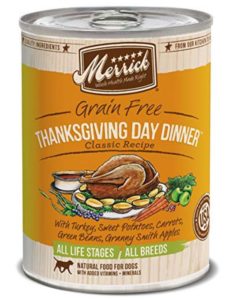
The ingredients even look like they’d work for keto-maintenance. . .
(But this year, for Xmas, I’ll probably just go with Xmas Chili, otherwise known as “Green Chicken Stew with Rotel™’s”.)
Is a bishop who does not wear a mitre a butt joint bishop?

If a cow delivered milk to your door, would you tip it?